Chronic disease is diagnosed in the exam room, but too often shaped by whether patients can access healthy food. Physicians recognize nutrition as foundational to care, yet they are navigating a healthcare system that does not support food as medicine—leaving many patients unable to follow clinical guidance.
The Physicians Foundation’s survey of over 1,000 American physicians, conducted in collaboration with Medscape, examines how gaps in access to nutritious foods are impacting chronic disease outcomes—and what it will take to close them.
Healthy food is essential to preventing, managing, and treating chronic disease.
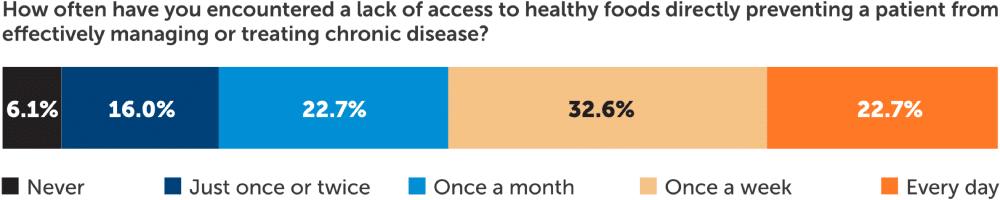
- More than half of physicians (55%) encounter patients at least weekly whose chronic disease care is compromised by a lack of access to healthy food.
- Nearly one in four physicians (23%) encounter these patients daily.
Improving access to healthy food can help prevent and treat chronic disease, yet our healthcare system doesn’t treat nutritious food as medicine.
Physicians report limited confidence in patients’ ability to follow dietary recommendations.
- 72% of physicians are only somewhat or fairly confident.
- Nearly one in five (18%) report no confidence at all.
- Just 10% of physicians express high confidence.
Physicians recognize that addressing food insecurity is key to improving patient health and lowering avoidable healthcare spending.
- More than three-quarters (77%) of physicians agree that addressing food insecurity would reduce downstream costs such as emergency room visits and hospitalizations.
- Nearly half of physicians (45%) report that patients with chronic diseases frequently or almost always experience worsening control of symptoms primarily due to drivers of health, rather than clinical factors alone.
The Physician Experience: Navigating System Gaps
Physicians aren’t just treating disease—they’re witnessing the consequences of a system that leaves patients without the resources needed to manage their health.
- 65% of physicians agree that current healthcare delivery systems (e.g., clinical workflows, reimbursement models, public health partnerships, etc.) do not provide adequate support for patients with chronic conditions.
- More than six in ten physicians (63%) experience stress, frustration, and/or moral distress over difficulty stabilizing a patient’s chronic disease due to drivers of health beyond their control at least once a week.
A Closer Look: Physician Autonomy
Significantly more employed physicians (66%) report personally experiencing stress, frustration, and moral distress compared to independent physicians (58%).
Solutions: Making Nutrition Part of Care
Physicians are clear: ensuring patients can access healthy food helps improve chronic disease outcomes.
Physicians identified several system-level changes that could make it easier for patients with chronic diseases to make healthier lifestyle and diet choices:
70
%
Support reducing prior authorization and administrative barriers, and 51% ranked it among their top three solutions.
68
%
Support insurance coverage for healthy food benefits, and 48% ranked it among their top three solutions.
66
%
Support simplified referral pathways to community and social services, and 45% ranked it among their top three solutions.
Additional solutions include:
- More time to counsel patients on drivers of health (60% agree).
- Improved access to stable housing (56% agree).
- The ability to prescribe healthy food (47% agree).
- Technology-enabled supports such as remote monitoring tools (47% agree).
Six in ten physicians (62%) agree that rapid integration of digital health tools, such as wearables, patient apps, and AI-driven risk stratification, can help physicians close gaps in chronic disease outcomes linked to drivers of health.
When patients cannot access healthy food, even the best medical care falls short. Integrating nutrition into care is not a complementary strategy— it is foundational to effective patient care.