

Press Releases

For adults with chronic disease, regular primary care access reduces health costs by more than 50%, lowers odds of hospitalization by 20%
BOSTON, February 12, 2026 — As the administration continues to invest in efforts to combat the nation’s rapid rise in chronic disease, a new national report reveals that people with chronic disease who have a usual source of primary care have better health outcomes and far lower health care costs. Developed by researchers at the Robert Graham Center for Policy Studies in Primary Care and co-funded by the Milbank Memorial Fund and The Physicians Foundation, the 2026 U.S. Primary Care Report finds that having a regular source of primary care is not only associated with a 20% lower hospitalization rate, but also nearly 54% lower health care costs for adults with chronic disease. The health benefits for children with chronic disease who receive routine primary care are even more substantial.
These findings come amid a steady decline in the share of adults and children who have access to a usual source of primary care in the United States. Less than 5% of total U.S. health care expenditures are spent on primary care, and nearly one-third of adults lack a usual source of primary care.
Key Report Findings Include:
Regular access to primary care is associated with lower hospitalizations and emergency department visits in adults and children
Health care costs for people with chronic disease are substantially lower when primary care is part of ongoing care
People with a usual source of primary care are far more likely to receive preventive services
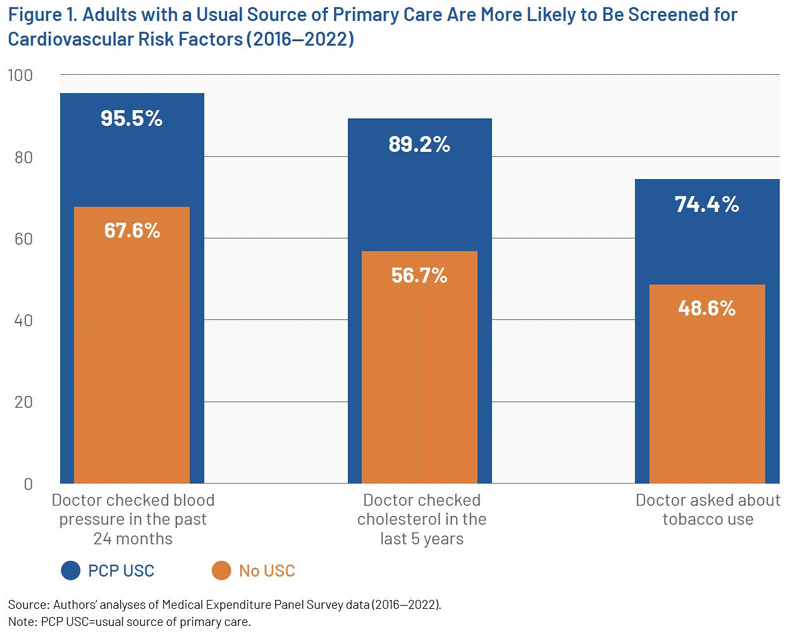
“The U.S. Department of Health and Human Services’ Make America Healthy Again agenda emphasizes the enormous toll chronic disease takes on our country,” said report author Christopher F. Koller. “This research shows that investing in primary care — the part of the health system focused on prevention and long-term relationships between patients and clinicians — should be a critical part of this strategy.”
To ensure more people can access the primary care they need to stay healthy and avoid costly hospitalizations and ED visits, the report authors underscore the role of federal, state, and private-sector health care leaders in increasing investment in primary care and strengthening primary care coverage for families. The authors also highlight the need for U.S. medical education and workforce policies to prioritize the training of primary care clinicians, especially for communities with limited access to care.
“Primary care is the simple answer hiding right in front of us to aid in America’s fight against chronic disease and rising health care costs,” said Ripley Hollister, MD, a practicing family medicine physician and Board member of The Physicians Foundation. “This report reflects what physicians see every day: when patients have a trusted, usual source of primary care, outcomes improve and avoidable costs decline. Yet millions of Americans still lack reliable access to primary care, while the clinicians providing it face chronic underinvestment and growing administrative burden.”
Along with the report, national and state-by-state performance on key measures of primary care financing, workforce, training, and research are available in an updated US Primary Care Scorecard data dashboard.
Study Methods
The findings are based on analyses of Medical Expenditure Panel Survey (MEPS) data from 2016-2022, the most recent data available, for adults and children, as well as Medicare fee-for-service claims data from 20182019, the most recent years available to the research team. A “usual source of primary care” is defined as having a particular provider or a place where an individual usually goes when sick or in need of health advice.
About The Physicians Foundation
The Physicians Foundation is a public charity seeking to advance the work of practicing physicians and improve patient access to high-quality, cost-efficient care. As the U.S. health care system continues to evolve, The Physicians Foundation is steadfast in strengthening the physician-patient relationship, supporting medical practices’ sustainability and helping physicians navigate the changing health care system. The Physicians Foundation pursues its mission through research, education and innovative grant making that improves physician wellbeing, strengthens physician leadership, addresses drivers of health and lifts physician perspectives. For more information, visit www.physiciansfoundation.org
About The Milbank Memorial Fund
The Milbank Memorial Fund works to improve population health and health equity by collaborating with leaders and decision makers and connecting them with experience and sound evidence. Founded in 1905, the Milbank Memorial Fund advances its mission by identifying, informing, and inspiring current and future state health policy leaders to enhance their effectiveness; convening and supporting state health policy decision makers to advance strong primary care and sustainable health care costs; and publishing evidence-based publications and The Milbank Quarterly, a peer-reviewed journal of population health and health policy. For more information, visit www.milbank.org.


